Author Susan Macatee Shares Her Writing Journey and New Historical Romance

I’m pleased to have my friend and fellow Wild Rose Press author Susan Macatee with me today.  One of the nicest women I know and very talented.  Thank you for sharing your writing and your new story with us, Susan. What has this writing journey been like for you?

It’s been a long one. (*I hear you) I dreamed of being a writer when I was still in school and actually submitted my first story to a magazine when I was in college. It was rejected with a handwritten note from the editor. Being such a newbie, I didn’t realize this was a positive rejection, so was devastated, thinking my writing was no good.  *Yes,  we learn to we cling to the ‘good’ rejections.

Although I still continued to dabble in writing stories, I didn’t dare submit anymore.

Years later while a stay-at-home mom with my two oldest sons, I started dabbling again and purchased how-to writing books to sharpen my skills. It wasn’t until my youngest son started school that I joined Romance Writers of America. That started me on a serious journey toward publication, but it was years before my first romance novel, Erin’s Rebel, was purchased by The Wild Rose Press. I now have three novels and several novellas and short stories under my belt and have ideas for many more.

*Susan, please share a bit about your new release and characters?

Cassidy’s War is a post-Civil War romance based on an earlier published Civil War novel that’s now out-of-print. I used the same characters, but they’re now five years older and their lives have been forever changed by the experiences they lived through during the war.

The heroine, Cassidy Stuart, served as a nurse volunteer and worked alongside her physician father in his home town practice. Six months before Cassidy’s War opens, her father was killed in a carriage accident, but Cassidy wants to keep his practice going with the help of her older brother, a recent medical school graduate. Cassidy’s biggest ambition is to attend medical school herself, although the profession is frowned upon for a woman in that time period.

The hero, George Masters, served as a Union soldier during the war, alongside Cassidy’s brothers. Her oldest brother, Josh, was killed at Gettysburg and George, who was severely injured in the attack, witnessed his best friend’s death first hand. After recovering at home, he reenlisted and was captured late in the war, ending up in Libby Prison. After the surrender he returned home and proposed to Cassidy, then left two days before they were to be married.

Although post traumatic stress disorder wasn’t thought of in the Civil War, George did suffer from it. After five years of wandering, drinking and earning his living as a professional gambler, he straightened out his life and obtained a job working as a Pinkerton Agent. He returns to town undercover to investigate a new doctor in town who assaulted a young woman in his father’s practice in Philadelphia and is now hiding out in George and Cassidy’s small town trying to steal patients from Cassidy and her brother.

*Sounds very interesting and realistic.  I’ll bet a lot of them suffered lingering psychological trauma from that horrific war. My passion for the past has inspired me to write stories that are straight historical or paranormal romances with a historical bent.  What inspires you to write historical romance, and you also write paranormals, don’t you?

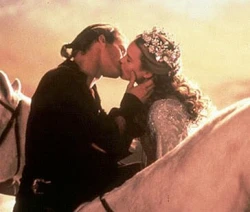
My years spent as a Civil War reenactor inspired me to write romances set in the period. What could be more romantic than gaslight, hoopskirts and a handsome man in uniform? I also write paranormal, because I’ve always loved reading and watching movies and shows with paranormal subject matter. My favorite paranormal element is time travel. It’s just so much fun to write about a modern day man or woman being thrown into the past to find love with a figure from history. I also have a few historical vampire stories out. I was inspired to write vampires from my years watching ‘Dark Shadows’, Anne Rice’s and the late Dawn Thompson’s books. In fact, I took a writing course from Ms. Thompson and she encouraged me to write a vampire tale.  (I love this pic!)

*An intriguing mix.  What helps you bring your historical characters to life and give them authenticity?

I learned enough of the small day to day historical details as a reenactor to give my stories that authentic feel. At least that’s what readers and reviewers have said.

*What challenges do you face in building emotional bonds between the characters?  I know I struggle at times when the H&H can’t stand each other, and have had to make some real adjustments, like a new pairing.

I use templates from a course I took a few years back on the psychology of building characters. I choose opposite templates for hero/heroine and use the personality traits of each type to give them tons of conflict, but they ultimately are able to work through all of that to find the happily-ever-after ending. And the templates make their decisions feel that much more realistic, because what they do is based on their personality types.

*A template hmmm….  Mine are often inspired by dreams.  But your practical approach sounds very helpful.  Which is more important in your stories character or plot?  And along those lines are you a plotter or do you write where the muse leads you?

I’m definitely a plotter, but that said, I have to develop the characters first. Without a well-drawn character, I have no story. But I wrote my time travel romance, Erin’s Rebel, without a detailed plot outline and spent over a year getting the story straightened out enough to submit. I decided I needed to plot out all my stories, particularly full-length novels, if I was to get them written and submitted in a year or less. Otherwise, I was just wasting time and effort. Can’t wait on a muse. Lol

*I wait on that doggone muse with a butterfly net in hand.  We have a very different approach, but yours works well for you. What do you find most rewarding about your writing career and not so rewarding?

Seeing a book with a beautiful cover and my name across it, is the most rewarding aspect of writing. I also enjoy the writing process, especially the first draft where I bring my characters to life.  *Ah yes.

The least rewarding is the time and effort spent on book promotion. While I enjoy interacting with readers, most of the time I end up just sending excerpts and promo info out into cyberspace. It’s less time I can spend in the actual writing process.  *Yes indeed.

*What advice would you give to new writers just beginning this journey?

If you get a rejection with a handwritten editor’s note, get to work revising and resending that story to someone else. And learn all you can about writing technique. If I’d done that from the start, I might’ve published years before I did. And lastly, you have to be determined to stay the course for the long haul. Despite stories you see in the news, it’s rare in this business for anything to happen overnight.  *Took me 12+ years to get published.

*Also, what are some of the things you often see beginning writers doing wrong?

Probably some of the same things I did in the beginning. Sending out one submission at a time and waiting months, even years for a response. And it was always a rejection. You need to keep writing, keep submitting, so you always have something out or in the works. It makes rejections so much easier to take.  *Amen to that.

*What’s next for you?

I have a new novella coming out in April from The Wild Rose Press. Cole’s Promise is a Civil War romance and part of the ‘Love Letters’ series.  *oh good.  I’m especially looking forward to this one and you joining me in the Love Letters series.

Here’s the blurb: Cole Manning, a Union lieutenant serving during the height of the American Civil War, expects a letter from his best girl, Hannah, who promised to wait for him.  But her post contains an unwelcome surprise.  She’s marrying someone else.  Heartbroken, he vows no woman will ever fool him again.

Claire Hirsch’s fiancé died in battle during the first year of the war.  Because she could no longer sit at home mourning, she volunteers to assist doctors in the camps.  Scarred by his death, she knows loving a soldier can only lead to heartache.

Cole and Claire find solace in each other’s arms, but is their love strong enough to overcome the fear of losing the one they love?

I’m also finishing up a new time travel novella called Thoroughly Modern Amanda. The story is a continuation of my Civil War time travel romance, Erin’s Rebel. But this story is set in 1881 in a small Pennsylvania town.

*Sounds fabulous, Susan.  I hope you will return and share more with each of these exciting new releases and mega congrats  Is there anything else you would like to share with, or ask our readers?

I’m a complete baseball fanatic and live for baseball season every year. I’m hooked on my local team, the Philadelphia Phillies. I try to attend at least one game each season and watch the rest on cable. I hardly miss a game. I   also have a collection of bobble heads that sit on top of my writing desk. lol

*Who knew. :)

*Finally, where can we buy your books and find you on the web?

My books are featured at many sites, including my website: http://susanmacatee.com

My blog: http://susanmacatee.wordpress.com

My group blog: http://slipintosomethingvictorian.wordpress.com

I also have a Twitter account https://twitter.com/#!/susanmacatee

An Amazon author page http://amazon.com/Susan-Macatee/e/B002GILTIS 

And Goodreads author page.

Blurb for Cassidy’s War:

The Civil War is over, but Cassidy’s War is just beginning.

Cassidy Stuart longs to attend medical school. Training beside her physician father and serving as a nurse during the war, have only increased her desire to be a doctor with her own practice.  When the man who’d left her at the altar returns, she’s determined not to let him upset the plans she’s set for herself.

Until his mission is accomplished, George Masters must hide his identity as a Pinkerton agent as he investigates a physician living in George’s former hometown, a short distance from Cassidy’s home. When he finds Cassidy hasn’t married, he hopes he can rekindle their love while trying to protect her and townsfolk from the evil Dr. Madison.

Can their love be renewed despite the villain’s desire for revenge against them both?

Excerpt:

The man in the door wasn’t Matt, but George. Had her mother let him in? He eyed her and frowned, his gaze drifting to the post in her hand.

Oh, Lord, just the man I don’t want to speak to right now.

“Cassie, Matt tells me you got a post.”

Drat, Matt! She chewed on her lower lip. Might as well tell him, he’ll find out anyhow.

She swallowed. “It’s from the medical school in Philadelphia, the University of Pennsylvania.” She dropped her gaze.

“And?” George prompted.

“They won’t accept me as a student.” She gazed into his eyes and shrugged. “I shouldn’t have tried.”

“I’m sorry, Cassie.” He stepped to her side and settled his arm over her shoulder. “I know how much this meant to you.”

She longed to collapse in the comfort of George’s arms. She’d found solace there years ago, when she thought him the man for her. But instead, she stiffened her spine.

“It’s all right,” she said. “It was foolish of me to try.”

George enveloped her in his strong arms. She bit her lip hoping to stave off the torrent of tears threatening to course down her cheeks. She yearned to bawl and scream at the injustice. She had the same credentials as Quinn, except for his experience as a steward during the war. But she’d served as a nurse, basically the same thing. Why wouldn’t they allow her to try?

George rubbed her back in an all too familiar gesture. The men in her life always felt the need to soothe her hurt away. Her father would’ve done the same.

She glanced up, frowning. “What are you doing here, anyway?”

He grimaced. “Not happy to see me? Reckon I deserve that. I spoke to Quinn. He told me he’ll be rebuilding your father’s practice.”

She nodded. “Now, he’ll be able to see patients over the summer and I’d hoped…” She swallowed, crumpling the post.

“It’ll all work out, Cassie.” He spun her to face him, and she buried her face against his rock hard chest. He’d filled out since she’d seen him five years ago.

She raised her face to his, losing herself in his dark gaze. He brushed her cheek with his fingers, then lifted her chin, sending delightful shivers through her body. Her lips parted in anticipation as he lowered his face to hers. His mouth brushed hers, gently at first, then pressed against her, shooting hot sparks to her core. His comforting scent of sandalwood, leather, and male enveloped her.

She sighed into the kiss, her tongue swirling inside his mouth. Her insides coiled with spiraling heat. She’d never been with a man and often imagined what it would feel like to have limbs intertwined, bodies pressed tightly with the one who set your soul aflame.

“Oh, George,” she gasped as he released his hold. Her skin moistened, body growing hotter by the minute. As a physician she knew what went on between a man and woman, but George sent her analytical thoughts spinning as want and need threw everything to the wind. She didn’t want the kiss to ever end.

“I know exactly how you feel, Cassie, but we have to stop now.”

“I know.” She nodded, not wanting to leave the warmth of his strong arms, but knowing she must. She gestured to one of the chairs.

“Sit, I’ll make tea. Then you can tell me why you’re here.”~

*Excellent excerpt.

Thanks for hosting me today, Beth!

*Enjoyed having you.  I share your fascination with the Civil War and love the Victorian era.

Cassidy’s War is available at The Wild Rose Press.

Seriously? The Cost of a Small Latte is too much for an ebook?

The state of ebooks in general and kindles in particular is a turbulent sea these days.  Amazon chummed the waters and authors are in a frenzy giving or practically giving away their hard-won books in an ever-increasing attempt to capture readers.  Temporary sales and giveaways are fine–I’m all for that and am very generous as many recipients can attest–but not as a perpetual state.   And that’s what I see happening.  Readers buy the kindle fire or whatever electronic reading device they’ve sunk money into, and have come to expect free or nearly free books to load it with.

My novels took years to research and write and rewrite and agonize over at much personal sacrifice.   My shorter novellas also required a great deal of blood, sweat, and tears to complete.  And  they aren’t even worth the price of a cup of coffee?

Maybe I should just give up and watch the Big Bang Theory and Grimm, my current obsession.  And gardening, of course, I always garden.  And read cheap books written by other talented authors.   Writing?  Well, I can always do that for my own amusement.

Final Day of The Amazing Author Event!

It’s time to answer those questions and win prizes.  My giveaway in this event is the ebook of my historical romance Red Bird’s Song (pdf or kindle, winner’s choice) inspired by events that occurred to my ancestors in the colonial frontier.  This adventure romance novel has a The Last of the Mohicans‘s flavor.

To complete the tour, pop into Author Ginger Simpson’s fabulous blog Cowboy Kisses for the grand finale.   All awaits you there.

Red Bird’s Song is a historical romance novel finalist in the 2012 EPIC EBOOK Awards.  What a change if a Native American themed novel won.  We shall see in March.

‘The sky has finally fallen. Always knew it would,’ & Other Eeyore Observations

“Owl flew past a day or two ago and noticed me. He didn’t actually say anything mind you, but he knew it was me. Very friendly of him, I thought. Encouraging.” ~Eeyore

“The old grey donkey, Eeyore stood by himself in a thistly corner of the Forest, his front feet well apart, his head on one side, and thought about things. Sometimes he thought sadly to himself, “Why?” and sometimes he thought, “Wherefore?” and sometimes he thought, “Inasmuch as which?” and sometimes he didn’t quite know what he was thinking about.~

“If it seems as though you haven’t ‘felt at all how’ for a long time, look behind  you. It could be that your tail is missing.” ~

“When your tail is missing, Remember you have every right to Mope.”~

“Having your tail recovered is well and good, but remember that it will have to be reattached.  With a hammer and a nail.” ~

“Use caution when standing by the river bank minding your own business. You might get bounced into the water.”~

“When stuck in the river, it is best to dive and swim to the bank yourself before someone drops a large stone on your chest in an attempt to hoosh you there.”~

“No Give and Take.  No Exchange of Thought. It gets you nowhere, particularly if the other person’s tail is only just in sight for the second half of the conversation.”~

“Good morning, Pooh Bear,” said Eeyore gloomily. “If it is a good morning,” he said. “Which I doubt,” said he.

“Why, what’s the matter?”

“Nothing, Pooh Bear, nothing. We can’t all, and some of us don’t. That’s all there is to it.”

“Can’t all what?” said Pooh, rubbing his nose.

“Gaiety. Song-and-dance. Here we go round the mulberry bush.”~

Eeyore,” said Owl, “Christopher Robin is giving a party.”

“Very interesting,” said Eeyore. “I suppose they will be sending me down the odd bits which got trodden on. Kind and Thoughtful. Not at all, don’t mention it.”~

“I might have known,” said Eeyore. “After all, one can’t complain. I have my friends. Somebody spoke to me only yesterday. And was it last week or the week before that Rabbit bumped into me and said ‘Bother!’. The Social Round. Always something going on.”~

“It’s snowing still,” said Eeyore gloomily.

“So it is.”

And freezing.”

“Is it?”

“Yes,” said Eeyore. “However,” he said, brightening up a little, “we haven’t had an earthquake lately.”~

Eeyore walked all round Tigger one way, and then turned and walked round him the other way. “What did you say it was?” he asked.

“Tigger.”

“Ah!” said Eeyore.

“He’s just come,” explained Piglet.

“Ah!” said Eeyore again. He thought for a long time and then said: “When is he going?”~

Could you ask your friend to do his exercises somewhere else? I shall be having lunch directly, and don’t want it bounced on just before I begin. A trifling matter, and fussy of me, but we all have our little ways.”~

I thought,” said Piglet earnestly, “that if Eeyore stood at the bottom of the tree, and if Pooh stood on Eeyore’s back, and if I stood on Pooh’s shoulders -”

“And if Eeyore’s back snapped suddenly, then we could all laugh. Ha Ha! Amusing in a quiet way,” said Eeyore, “but not really helpful.”

“Well,” said Piglet meekly, “I thought -”

“Would it break your back, Eeyore?” asked Pooh, very much surprised.

“That’s what would be so interesting, Pooh. Not being quite sure till afterwards.”~

“Eeyore, what are you doing there?” said Rabbit.

“I’ll give you three guesses, Rabbit. Digging holes in the ground? Wrong. Leaping from branch to branch of a young oak tree? Wrong. Waiting for somebody to help me out of the river? Right. Give Rabbit time, and he’ll always get the answer.”~

“But, Eeyore,” said Pooh in distress, “what can we – I mean, how shall we – do you think if we -”“Yes,” said Eeyore. “One of those would be just the thing. Thank you, Pooh.”
~“That’s right, Eeyore. Drop in on any of us at any time, when you feel like it.”“Thank you, Rabbit. And if anybody says in a Loud Voice ‘Bother, it’s Eeyore,’ I can drop out again.”~

“You don’t always want to be miserable on my birthday, do you?”~

“They’re funny things, Accidents. You never have them till you’re having them.”~

“Hitherto, all the Poetry in the Forest has been written by Pooh, a Bear with a Pleasing Manner but a Positively Startling Lack of Brain. The Poem which I am now about to read to you was written by Eeyore, or Myself, in a Quiet Moment. If somebody will take Roo’s bull’s eye away from him, and wake up Owl, we shall all be able to enjoy it. I call it – POEM.”~

“A little Consideration, a little Thought for Others, makes all the difference.”~

“That Accounts for a Good Deal,” said Eeyore gloomily. “It Explains Everything. No Wonder.”

“You must have left it somewhere,” said Winnie the Pooh.

“Somebody must have taken it,” said Eeyore. “How Like Them,” he added, after a long silence.~“I’m not asking anybody,” said Eeyore.

“I’m just telling everybody. We can look for the North Pole, or we can play ‘Here we go gathering Nuts in May’ with the end part of an ants’ nest. It’s all the same to me.”~

“I’m telling you. People come and go in this forest, and they say. ‘It’s only Eeyore, so it doesn’t count.’

They walk to and fro saying ‘Ha Ha!’. But do they know anything about A? They don’t. It’s just three sticks to them. But to the Educated – mark this, little Piglet – to the Educated, not meaning Poohs and Piglets, it’s a great and glorious A. Not,” he added, “just something that anybody can come and breathe on.” Piglet stepped back nervously, and looked round for help.~

~”This writing business. Pencils and what-not. Over-rated, if you ask me. Silly stuff. Nothing in it.”~

I like the puffy white clouds. Aren’t they… that is… oh, my goodness. They’ve turned grey.” ~Winnie the Pooh

Never trust a cloud, I always say.”~Eeyore

“We can’t all, and some of us don’t. That’s all there is to it.” ~Eeyore

Sweet Saturday Snippet from Revolutionary War Romance Enemy of the King

As I mentioned Enemy of the King in my post below on herbs in colonial America, it seems a fitting time to feature this historical romance novel set during the high drama of the American Revolution.

’1780 South Carolina, spies and intrigue, a vindictive ghost,  the battle of Kings Mountain, Patriots and Tories, pounding adventure, pulsing romance…ENEMY OF THE KING.’

‘An amazing and vibrant look into the American Revolutionary War…This sexy historical book is a must read!’~ Danielle, Coffee Time Romance & More

Excerpt:

Captain Vaughan escorted Meriwether back over the path she and Jeremiah had walked not long ago. Yet everything changed.  Apart from the staggering disclosures Jeremiah had made and their impassioned encounter, dragoons and Loyalists now accompanied their return. She and Vaughan led the way. Jeremiah followed slightly behind them in the middle of the pack. The clink of swords and tread of boots betrayed her silent companions, as if she could forget they were there for an instant.

Meriwether hadn’t any idea what Jeremiah had in mind by way of escape, only that a way must be  found. Wild to reach the kitchen and the Daws family, especially Keith, she half-trotted at Vaughan’s side, her satin slippers wet and ruffled hem dipping in puddles along the path.

“Why the hurry, Miss Steele?” Vaughan asked as he slid his fingers up her bare arm.

She shrank from his touch and reined herself in.  “No reason,” she said and shivered.

“You’re covered in goosebumps. We can’t have  you taking a chill.” He stopped and the assembly halted as he removed his coat to drape the resplendent garment around her shoulders.

The wool was still warm from him and the tight weave had kept the rain from soaking through, but she had no wish to be so familiarly outfitted by the bold captain. “Thank you, sir,” she made herself reply.

Jeremiah said nothing. He didn’t need to. His anger radiated from behind her like a scorching hearth. “This way, Captain, please. I must speak with the cook,” she said.

“If you like. I’ve no objection to instructing cooks.”

She knew Vaughan wasn’t easily fooled, however. She must tread with care and refrained  from tugging at his sleeve as he walked with her over the brick path between the herb and vegetable beds in the kitchen garden. Ordinary things like beans and squash seemed out of place at such a dire time. It would be more fitting if the earth opened up and swallowed their most unwelcome visitors.

A gust of wind blew hair into her eyes, and she battled her flapping skirts down with her hands.’

Vaughan chuckled. “Would that it were not so dark and I could better see you, Miss Steele.”

“Would that I had a sword to better slay you,” Jeremiah growled.

“What makes you so certain you would triumph if you did?” Vaughan flung over his shoulder.

“Try me and see,” Jeremiah challenged in turn.

“Why bother? You’ll soon have Cornwallis to deal with.”

And you have me to battle before you take him, Captain, Meriwether vowed.

Tumultuous passion, pounding fear, and the urge to break free from Vaughan all seethed inside her. Like a hunted fox, her senses were heightened. The stars seemed brighter, the wind crisper, and the tang of smoke from the chimney sharper.  Pungent aroma rose from the feathery dill as the wet foliage spattered raindrops against her. Forever after, whenever she smelled dill, she would remember this night.~

*Publisher’s Weekly BHB Reader’s Choice Best Books of 2009

*2010 Best Romance Novel List at Buzzle

*ENEMY OF THE KING is available in print & digital download  at: The Wild Rose Press, AmazonBarnes & Noble and other online booksellers.

***For more authors participating in Sweet Saturday Samples Click HERE.

Herbs Of Colonial Williamsburg and Early America

I love old-fashioned gardens, particularly those with herbs.  I grow many of my own heirloom flowers and herbs, even  included a lovely garden in my award-winning  Colonial American romance novel set during the American Revolution entitled Enemy of the King.  Actually, herbs and old-time flowers are in all my stories, more or less,  but back to the plants.

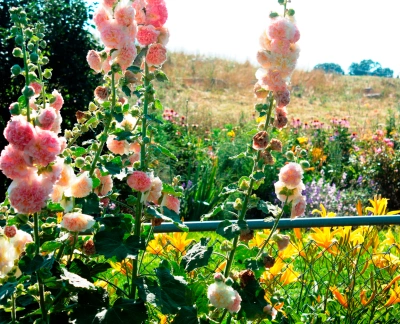
(Image from our garden.  Photo by daughter Elise, as are all others taken of our garden from last year.)

Not only were the colonists acquiring native plants and the knowledge of their uses from American Indians, but they brought cherished plants with them from The Old World (seeds and rootstock).  By the mid to latter 1700′s, the variety of herbs and vegetables grown encompassed all those known to the Western World–or potentially could have.

The colonial kitchen garden was planted outside the back door, so these vital herbs were at the ready.  In addition to using the herbs fresh, many plants were bound together in bunches and hung upside down to dry from the kitchen rafters.  Dried roots were stored for later use.  Tinctures and decoctions made from plant leaves and stems were administered in liquid form.

From: Dooryard Garden Colonial Herbs:

“Throughout colonial New England, on rural farms and in small villages, the dooryard was the focal point for many daily projects. Generally sited to receive the warm southern sun, and protected by the barn and other outbuildings from bitter northwest winds, this area was used for such activities as washing clothes, making soap and candles, chopping wood and processing meat.

The colonial woman’s dooryard garden, along with her larger vegetable gardens, was expected to provide many of the foods, flavorings, medicines and chemicals necessary for a largely self-sufficient household with little cash. Plants such as madder and woad were used to dye cloth, southernwood and pennyroyal served as insect repellents, basil and sage improved and sometimes masked the flavors of food.
Since most households were isolated from medical care, herbs such as yarrow, angelica, feverfew and valerian were used to treat common ailments or aided in childbirth.”~
*For more on planting your own dooryard garden refer to the highly informative link above.

I’ve read of tansy grown outside the back door to repel ants from coming into colonial homes.  Tansy is an attractive, robust herb with gold button flowers.  Be warned that it needs space, forming dense clumps.  The sap attracts ants so maybe the idea is the ants cluster around the tansy and stay out of the house.

Imagine the rich blend of fragrances in a colonial kitchen, the spicy scent of  dried herbs mingled with wood smoke from the hearth, the stew simmering in a big iron kettle and savory meat roasting over the flames. Delightful.  Also mentioned in my Colonial American romance novel Enemy of the King, as well as some herbal cures and treatments.

From: The Gardens of Colonial Williamsburg:

Colonists often mentioned what plants they were growing when they wrote to friends and relatives back home in Europe. Many of these letters survive and have served as a guide to planting the reconstructed gardens. Archaeologists have found seeds from some of the original plants in Williamsburg, and can do soil analysis to tell exactly what type of plant was grown in a particular spot. While most of the trees, shrubs and plants seen today in Williamsburg are authentic to the Colonial period, astute observers will notice an abundance of crepe myrtles, pruned as trees in the Southern tradition. That’s because John D. Rockefeller, who financed the restoration, loved crepe myrtles and wanted them in the restored city. And since he was paying the bills …”

~“Many of Williamsburg’s gardens reflect the Dutch-English patterns, popular during the reign of William and Mary. This garden style, characterized by geometric symmetry within an enclosed space, was common in England in the late 17th and early 18th century. The emerging trend toward naturalistic gardens in contemporary England did not appeal to the settlers in Virginia, where a natural landscape did not need to be re-created. To them, a garden was nature tamed, trimmed and enclosed. Like many travelers, the colonists attempted to reproduce the homes they had left behind. Frequently they brought seeds of favorite plants and bulbs to rebuild a version of their old gardens. Garden paths were made of gravel, crushed oyster shells and bits of broken brick. Walkways paved with brick would have been too expensive.

Some favorite colonial kitchen and medicinal herbs:

Basil, also called St. Josephwort, was grown for commercial use in Virginia before the American Revolution.

Used as a flavoring,  particularly in salads and soups, pea soup, the clove fragrance of basil improved the taste of foods.  Also a strewing herb.  And the leaves were dried for use in snuff  to relieve headaches and colds.  I love the fragrance and flavor of basil.  A few plants linger here in my garden in the Shenandoah Valley but the first frost will take them anytime now that October is in full swing and a chill wind blowing.

BEE BALM: 

(Image by daughter Elise)

Used for bee stings. Bee Balm is a member of the mint family. It is native to North America but colonists soon sent seeds to Europe for their friends to plant and enjoy. Tea brewed from its leaves was called Oswego tea and was used as a substitute for china tea after the 1773 Boston Tea Party.  I am a big fan of bee balm, growing it with more or less success depending on the season.  The flowers really do attract butterflies and hummingbirds.

CARAWAY: 

The roots were cooked and eaten like carrots, and the seeds chewed or added to cheese, fruit and baked goods.  Caraway seed is an aid to digestion. I’m not a fan of caraway.  No, not even a little bit, but included it for those of you who are, plus it’s historical.

CATNIP:  

A tea brewed from the leaves was used to treat stomach ache and head colds.  Catnip was also steeped in wine and imbibed that way.  I read if a woman wanted to increase her fertility she might soak in a catnip sitz bath.  Catnip will take over the garden if you let it, but I like the scent, and the plant, though kind of weedy, is appealing in full flower.

Of course, cats are big fans of catnip.  They get quite intoxicated by the scent.  Although this kitty seems rather relaxed.  I have cats who literally roll on the catnip in the garden and nibble it.  They also like the related herb catmint, pictured below.  I’ve grown catmint for years and the same plants are still there blooming faithfully each year, about late spring.         

(*From our garden) Chamomile:

“Camomill is put to divers and sundry uses, both for pleasure and profit, both for the sick and the sound, in bathing to comfort and strengthen the sound and to ease the pain of the diseased.” ~John Parkinson

Another herb commonly grown in Colonial Williamsburg was Chamomile, a lovely herb.  I grow both the lower ground cover variety and the annual reseeding kinds, known as Roman and German chamomile.

In early America, the flowers brewed into a tea were used to treat stomach complaints and dispel cold and aches.  A sugary syrup made with the flowers was thought to treat jaundice and dropsy.  Chamomile flowers in the bath are an aid to skin irritations.  It’s known as the gentle soothing herb. Chamomile is a strewing herb and insect repellent.  It’s also just darn cheerful.  A very happy herb to grow.  Lifts the spirits just to look at it and the fragrance is appealing, soothingly nice.

Chives:  

Who doesn’t like chives?  As long as you don’t get too carried away adding the chopped stems to food.  Chives flavored dishes and the flowers added color to arrangements in early America.  Onions and garlic figured prominently in treating many colonial ailments and were thought to offer protection from evil spirits.  I grow and like chives.  The purple blossoms are pretty in late spring.  I also grow a variety called garlic chives that are white when they flower later in the season, quite pretty, and add good flavor in cooking.  They also reseed freely so bear that in mind.

DILL: 

A favorite in our garden, partly because the caterpillars of the Eastern Black Swallowtail butterflies feed on the leaves and make their chrysalis on the stems, fun to watch, but also because dill smells wonderful and tastes good.  Colonial Americans grew dill to flavor stews and pickles, also for its healthful properties.  Again, another soothing herb.  They also used it to treat hiccups.  But I don’t know if that works.  I don’t know that a lot of what they did worked.  It all depended on the herb and whether that plant actually possessed the properties colonists thought it did. (This image of dill in our garden is growing along with an old fashioned poppy I got seed for from Monticello).

HYSSOP:

 A popular medicinal herb in early America.  I used to grow hyssop but it died out and needs replanting.  The fragrance is potent and not altogether pleasing, but the plant is pretty.  The blooms come in pink, white or blue.  I prefer the blue color.  The colonists used hyssop tea mixed with honey and the herb ‘rue’ as an expectorant.  That doesn’t appeal to me.  I’d rather use the bruised leaves, as they did, applied with sugar to a “greene wound.”  Hyssop was thought to fight infection and to kill head lice when soaked in oil.  An oil of leaves and flowers was applied to arthritic joints.  Also used as a strewing herb.

PENNYROYAL:

Strewing herb. Flea and mosquito repellent.  I love the pungent scent of pennyroyal. I haven’t had success in getting it to live for some reason.  Need to try again.

(Image of butterfly on flowering catmint mentioned above).

MINTS: We have a variety of mints on a determined march to the sea in our yard and garden but we love the intoxicating scent and mint tea is a huge favorite, so we pull only a little of it out.  In colonial America, they drank spearmint to comfort the nerves.  I should also think as an aid to the stomach which the mint family is rightly known for.  In cooking, mint was boiled with fish or dried and added with pennyroyal to puddings and green peas. Also a strewing herb.

PARSLEY: I like the flat leaf variety and grow it.  Parsley was used in early America to dispel the gamey taste from wild meats, like venison. The boiled roots were thought to remove “obstructions of the liver” and to promote urine production. (This image of parsley in our garden shows it growing beside asparagus s and black-eyed Susan.)

ROSEMARY: A pot of this herb is growing in my window.  Rosemary was important in colonial times and popular in Williamsburg. An oil made from the flowers was applied to restore eyesight and remove spots and scars on the skin. Compresses of the leaves and oils were used for the head and heart to relieve painful joints and muscles, or “sinews.” Rosemary was often potted up and kept inside for the winter. The farther north you live the less likely you are to see rosemary in flower.  I seldom get the plants to that size.  Rosemary isn’t happy inside in winter here, but clings to life.

HOREHOUND: 

Used to make a cough syrup. Often used with honey and other herbs. Mixed with plaintain for snakebites. Soaked in fresh milk to repel flies. The leaves are used for flavoring beer, cough drops, honey and for making tea.  I have grown horehound and the plants definitely need room to spread.  I love horehound drops.  It does sooth the throat.

LAVENDER
Strewing herb and insect repellent.  Essential in English lavender water.  Recipes found their way to colonial America, as did the plants.  Lavender blossoms have long been dried and used in sachets and potpourri to freshen clothes, linens, rooms,  and to repel insects.  An excellent site on English Lavender Water and more on the herb. *Used to rinse hair.

From Crabtree and Evelyn: “This light, refreshing potion is perhaps the oldest known and most frequently used lavender product. Recipes for it were exchanged by women of the Roman era, books throughout Europe and Colonial America. Ours is classic English lavender infused with fresh floral and citrus notes.”

I definitely want a bottle or two. I love lavender, am forever planting new varieties trying to get some to survive our winters.  We have heavy soil, so am amending that and someone suggested growing the lavender in among stones that hold heat to warm the plants.  *Image of lavender with roses in our garden.  The wooden stakes we use not only help support sagging plants but also discourage large farm dogs from sitting on them.  So we use a lot of stakes and large sticks fallen from various trees.  Also called ‘marking sticks’ so we remember where we’ve planted a row of seeds or new seedling.

SAGE:

A favorite in our garden, sage has been grown for untold ages, as have all these herbs.  Sage was a culinary favorite in colonial America (soon gaining popularity with Native Americans) and also an important  medicinal herb for a plethora of illnesses.  As a spring tonic to cleanse the body, colonists fasted on sage with butter and parsley.   Sage brewed into an ale was given to women to aid in delivery.  Sage has may other uses, as a tea sweetened with honey for sore throat or as a gargle.  Sage reduces perspiration and was used for fevers.  And so on. (Image of fuzzy sage and larkspur in our garden).

THYME:

I love thyme.  We grow many varieties.  The species of thyme grown by the colonists was an upright, wild variety that survived the cold winters.  I need to find this one.  The best I can do is the English thyme which seems to be hardier than the French.  Some of the creeping thymes do well here.  Colonists used thyme for melancholy, spleenic conditions, flatulence and toothache. (One of several kinds of creeping thyme we grow in our garden).

For more on colonial herbs and their uses:http://www.chaddsfordhistory.org/history/herbs4.htm

A wonderful sounding book that I would like to get is Flowers and Herbs of Early America~It’s a beautiful big hardback book and rather pricey so we shall see.  Recommended by the Colonial Williamsburg Historical Society.

Available at the Amazon link above.

18th century methods for producing herbal remedies

Tincture: herb is soaked in alcohol, strained and used.

Decoction: This method was used for tougher parts of the herb plants, the roots, stem and bark. The herb is boiled in water until water is reduced by 1/2 to 1/3.

Infusion: Immersing the herb in water as in tea.

Distilled: Infusing the herb with water, boiling same and catching the condensed steam. Makes a condensed form of an infusion.

From COLONIAL USE OF HERBS:

To understand the colonial use of herbs, we contemporaries must understand the basis on which decisions were made. Colonists based portions of their world view on teachings of early Greek writers. Theories about alchemy and astrology and concepts such as the four cardinal humors influenced many of the colonists’ agricultural, dietary and medical practices.

The four cardinal humors were the body fluids: blood, phlegm, yellow bile and black bile. The conditions and proportions of these affected the physical and mental health of the individual.

There were thought to be four basic human temperaments:

  • Yellow bile or choler – hot and dry, characterized by a fiery nature and a bilious complexion.
  • Phlegmatic (phlegm) – cold and moist, characterized by apathy and a pale complexion.
  • Melancholic (black bile or choler) – cold and dry, characterized by depression and sullenness.
  • Sanguine (blood) – hot and moist, characterized by great appetites and capacities, and a ruddy complexion.

The educated colonist would study an herbal, a book containing the names and descriptions of herbs, or plants in general, with their properties and virtues. The earliest herbal written in the English language was published in London in 1525. Additionally, much knowledge was passed along from parent to child, since many colonists were illiterate.

Most herbals listed the qualities of temperature of each plant – hot, cold, dry and moist – paralleling the four elements – fire, air, earth and water. These characteristics were said to be reflected in the human temperament.

In almost all individuals one humor was thought to dominate the personality. There were certain potential health disorders or imbalances associated with each humor. For example, the sanguine person was believed to be amusing and good-natured, but prone to overindulgence. Diarrhea or gout could be a problem for such an individual, so cool, dry herbs like burdock or figwort were used to cleanse the system.

Overly cooling foods were given when a patient had a fever, but those same foods were considered unsafe if consumed by a well person. Foods had to be combined to produce the proper combination for a healthy person.

Melons were chilling, so they were served with ginger or pepper, warming spices. Lettuce was cold and moist, so hot and dry pepper, hot and moist olive oil and cold and dry vinegar dressed it. Vinegar, itself, was considered cooling, so it had to be enhanced with peppercorns, coriander seeds or other warmers. Otherwise, vinegar would “make leane” and cause melancholy.

Another old idea of the period was the “Doctrine of Signatures” or “Law of Similars”. This was the notion that a plant looked like the human organ or symptom of the disease it could benefit. Plants containing a milky juice, like lettuce, were thought to “propogate milk in nursing mothers”. The walnut, which looks somewhat like a brain, when properly prepared and laid upon the crown of the head, was said to comfort “the brain and head mightily”.

The use of herbs and plants in the colonial household was carefully decided based on the knowledge and observations of the time.

****

A very interesting article on  Apothecary Herbal Healing:

“Before pharmacists, there were apothecaries. During the Colonial period in America, apothecaries dispensed medicines, including herbal remedies. Apothecaries functioned as pharmacists and doctors. Their skills with herbs made apothecaries reliable resources for people seeking healing from any ailment. Apothecary gardens provided herbs to aid healing. The art of apothecary continues in the modern era. Herbalists grow their own herbs and treat ailments just as their colonial foremothers-and fathers. The term, apothecary, came to be used for the store where the apothecary operated. Apothecaries are the ancestors of modern pharmacies or drug stores.”~

*In conclusion, herbal treatments may or may not have been administered based on an actual knowledge of how that plant’s properties affected a particular condition.  Some remedies were tried and true while superstition influenced other supposed treatments and cures.
*Pics are from our garden,  Colonial Williamsburg, Monticello, and Mt. Vernon.

Visit Our Celtic Fling At Coffee Time Romance

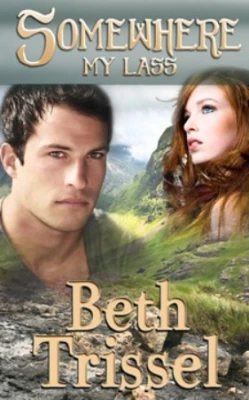
If you’d like to win Suspenseful Scottish Time Travel Romance Somewhere My Lass pop into the Celtic Fling Chat at Coffee Time Romance and leave me a comment. (8:00 am–8:00 pm)

“Ms. Trissel masterfully blended the past and the present in order to create a lovely romance that spans centuries.” ~Poinsettia, Long and Short Reviews

An ancient relic, a medieval crypt, a mad Highlander at their throats and time fast running out.  Mystery, suspense, romance… 

SOMEWHERE MY LASS

BLURB: Neil MacKenzie’s well-ordered life turns to chaos when Mora Campbell shows up claiming he’s her fiancé from 1602 Scotland. Her avowal that she was chased to the future by clan chieftain, Red MacDonald, is utter nonsense, and Neil must convince her that she is just addled from a blow to her head–or so he believes until the MacDonald himself shows up wanting blood.

Mora knows the Neil of the future is truly her beloved Niall who disappeared from the past. Although her kinsmen believe he’s dead, and she is now destined to marry Niall’s brother, she’s convinced that if she and Neil return to the past, all will be right. The only problem is how to get back to 1602 before it’s too late.

The balance of the present and future are in peril if she marries another, and the Neil of the present will cease to exist. An ancient relic and a few good friends in the future help pave the way back to the past, but will Mora and Neil be too late to save a love that began centuries before?~

EXCERPT:  How in the name of—Stunned beyond oaths, Neil gaped down at the slender young woman dressed in an outlandish Scottish costume.

Hair the color of a flaming sunset spilled down over the red and blue tartan plaid draped around her like a shawl. A circular brass brooch heavily engraved by some skilled craftsman held the edges together. A full green skirt covered the rest of her, a hint of petticoats beneath.

Good God. She looked straight out of the Old Country.

In profound disbelief, he knelt beside her and laid his hand on her shoulder. He wasn’t hallucinating. She was real enough, warm against his hand. Stranger still, the peaty scent of turf smoke emanated from her. And some perfume he couldn’t place, but inherently knew.

Moss rose, maybe? The rich meld of fragrances carried him back, but to where? Baffled, he shook her gently. “Miss?”
She gave a soft moan.
“Are you hurt?” he asked.

She turned toward him, fluttering a dark fringe of auburn lashes. Another moan issued from between what surely were petal soft lips. He frowned at the ugly bruise marring her forehead.

Had that maniac done this to her? The rest of her smooth skin was pale except for the sprinkle of freckles on her nose—not too long with a pert tilt, Neil noted, along with an absence of any other immediate injuries. Thank God he hadn’t been too late to help this young woman. Perhaps he’d frightened off her attacker, the coward. Although he had no idea where the killer had gone.

Neil remained on his guard. He mustn’t take anything for granted. The only certainty—a violent criminal was on the loose. Difficult to keep watching over his shoulder, though, with the inexplicable stranger commanding his attention.

Intrigued, despite the gruesome circumstances of their meeting, Neil locked his gaze on her once again. Vivid blue eyes, cast with a purplish hue, opened wide. Unusual color and deeply stirring. She blinked and stared up at him as if he’d materialized out of the mist. But it was she who’d mysteriously come upon him with such wonder and beauty.

His already pounding heart skipped a beat for an entirely different reason now. He looked long into her eyes…for a moment he forgot the grisly murder, forgot everything.  There was a timeless quality in those violet depths; the term “window to the soul” took on a whole new meaning. And it seemed to him that he’d seen these eyes before… Impossible.

He came back to himself. Mastering the tremor threatening his speech, he said, “You were knocked out, but you’ll be all right.”
She shook her head, wincing. “None of us will. The MacDonald comes,” she warned in a Scottish brogue.

The hair on the back of Neil’s neck bristled. And so it begins, a voice inside him said.~

“The glowing reviews for this book are not to be ignored. If you are not really a fan of time travel, this book will make you feel differently. Even though this was a romance novel, the adventure of the whole book was exciting and appealing.” ~Romance Novel Junkies

*I would rate this story PG13.

“Somewhere My Lass presents a convoluted time-twisting conundrum which becomes more intriguing as it goes along. I found the romance of it touching, the enigma baffling, and the resolution unexpected. A light, interesting blend of contemporary and historical fiction.” ~joysann, Publisher’s Weekly

SOMEWHERE MY LASS is available in various e-book formats to suit any readers or electronic devices at: The Wild Rose PressAmazon KindleBarnes & Noble and other online booksellers.  *Price for this story recently reduced.

For the Love of Roses Quotes and Pics

“You are responsible, forever, for what you have tamed. You are responsible for your rose.”

~Antoine de Saint-Exupery

*Pics by my daughter Elise
This  cold January day makes me yearn for roses, the wonderfully scented varieties that bloom in the garden on a glorious June morning. We also grow our roses in with other heirloom flowers and herbs.  No, they are not perfect because we are organic gardeners.

“Life is a rose; beware of the thorns.”

“Beauty without virtue is like a rose without scent.”
~Proverb Quote

“LOVE IS MUCH LIKE A WILDROSE, BEAUTIFUL AND CALM, BUT WILLING TO DRAW BLOOD IN ITS DEFENSE.”~MARK OVERBY

“How did it happen that their lips came together? How does it happen that birds sing, that snow melts, that the rose unfolds, that the dawn whitens behind the stark shapes of trees on the quivering summit of the hill? A kiss, and all was said.”
~ Victor Hugo
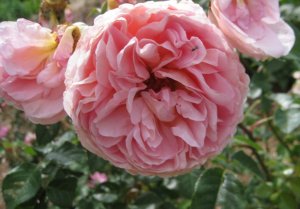
***Abraham Darby is my favorite rose by English rose breeder David Austen.
For more on his amazing roses visit the link.
“Do not watch the petals fall from the rose with sadness, know that, like life, things sometimes must fade, before they can bloom again.”


“The splendor of the rose and the whitness of the lily do not rob the little violet of it’s scent nor the daisy of its simple charm. If every tiny flower wanted to be a rose, spring would lose its lovliness.”
~Therese of Lisieux

“The rose is a flower of love. The world has acclaimed it for centuries. Pink roses are for love hopeful and expectant. White roses are for love dead or forsaken, but the red roses, ah the red roses are for love triumphant.”

“He who wants a rose must respect the thorn.” Persian Proverb

“If I had a rose for every time I thought of you, I’d be picking roses for a lifetime.” Swedish Proverb

“Slow buds the pink dawn like a rose From out night’s gray and cloudy sheath; Softly and still it grows and grows, Petal by petal, leaf by leaf.” Susan Coolidge

Their lips were four red roses on a stalk. ~William Shakespeare

“The red rose whispers of passion,
And the white rose breathes of love;
O, the red rose is a falcon,
And the white rose is a dove.”
-~John Boyle O’Reilly

“And I will make thee beds of roses
And a thousand fragrant posies.”
~Christopher Marlowe

“The rose that lives its little hour
Is prized beyond the sculptured flower.”
~Bryant

“Here bloom red roses, dewy wet,
And beds of fragrant mignonette.”
~Elaine Goodale

“The rose is fairest when ’tis budding new,
And hope is brightest when it dawns from fears.”
- Sir Walter Scott

“She wore a wreath of roses,
The night that first we met.”
~Thos. Haynes Bayly
“We can complain because rose bushes have thorns,
or rejoice because thorn bushes have roses.This old world that we’re livin’ in
Is might hard to beat.
You get a thorn with every Rose
But – ain’t the roses sweet?”
~Frank Stanton

“I’d rather have roses on my table than diamonds on my neck.”
~Emma Goldman

“God gave us our memories so that we might have roses in December.”
~J. M. Barrie

“You are beautiful, but you are empty. One could not die for you. To be sure, an ordinary passerby would think that my rose looked just like you–the rose that belongs to me. But in herself alone she is more important than all the hundreds of you other roses: because it is she that I have watered.”
~Antoine de Saint-Exupery

“And she was fair as is the rose in May.” ~Geoffrey Chaucer

“Truths and roses have thorns about them.” ~Henry David Thoreau

“Love is like the wild rose-briar;
Friendship like the holly-tree.
The holly is dark when the rose-briar blooms,
But which will bloom most constantly?”
~Emily Bronte

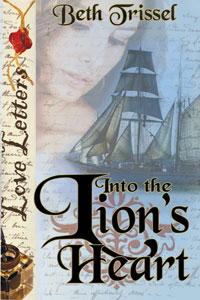
Sweet Saturday Snippet from English Historical Romance Into the Lion’s Heart

“A Brilliant Historical Romance!” ~Wanda at Romance Writers Reviews

Chapter Three:  October 1789, the King’s Arms, Dover,  England

With a petition to the Blessed Virgin that Captain Evans might find her très adorable, Cecile Beaumont lifted her burgundy-striped skirts and swished down the narrow steps from her second floor bedchamber to the scrubbed flagstone entry.

Fortune smiled on her and determined seamen had salvaged her trunk before The White Rose sank and bore all her worldly possessions to the bottom of the sea. That the forceful captain persuaded them to surrender her goods, she did not doubt. They’d plundered some of the cargo. Uproar followed, soldiers arrived, and shots were fired—a minor distraction to Cecile after the upheaval in France.

Her all-consuming focus centered on her doubtful ability to masquerade as Mademoiselle Devereux. What other choice had she? She must remain in England!

Robust voices assailed her from the thronggathered in the main room of the King’s Arms. She paused outside the arched doorway framed with darkened oak, then stepped uncertainly inside. The massive hearth, flickering white tapers, and oil lamps shed light on the guests, mostly men, quaffing ale and recounting the adventure of the day in lively animation. One man even stood on his hands— comical if Cecile hadn’t been so taken aback. And hardly a female was to be seen. Those women she spotted were serving wenches or more common folk. Surely it was improper for a young lady, whom Cecile made every effort to emulate, to progress unescorted among the boisterous assembly? Her rescuer had invited her to meet him here whenever she was ready. Or was he her guardian, host?

Whatever he was, her chest pounded like the surf when she spied Captain Evans seated alone at a corner table. His bearing instantly set him apart from the others. His companion, Sir Thomas Archer, must still suffer from his malady, poor man. The captain stared into the hearth as though oblivious of the surrounding commotion. His blond head shone in the mellow glow. He’d changed into a reddish-browncoat, fresh linen—not in the least frilled—fitted leather breeches, and boots buffed to a high gloss. His attire emphasized his rugged masculinity while declaring him a gentleman of the first order. And so he was, his late father a lord, she’d been told.

Should she hurry to his side, or remain as shewas? Calling out to a gentleman in public was unthinkable except under the most grievous circumstances. Hovering inside the doorway while male eyes roved over her didn’t qualify as dire, but she squirmed under their open appraisal. One bold man winked at her. Another made a gesture obscene in any language.

Cecile shrank back. Maybe she should hasten to her room and await a knock on the door. Her empty stomach protested and her heart drummed in expectation of meeting with the captain.

As if sensing her predicament, he glanced around. His blue gaze locked on her and the rowdy assembly faded into the background. A giddy swell surged through her middle, more potent than when she’d met the finest of French aristocracy, and stronger than any emotion she’d ever known—except fear. A goodly measure of that mixed in with the current coursing through her.

If violent emotion seized the captain upon sighting her, he gave no indication. Acknowledging her arrival with a nod, he got to his feet and strode to where she waited. The hint of a smile, reflected in his eyes, provoked a rush of hope in Cecile.~

Historical romance Into the Lion’s Heart is reduced at The Wild Rose Press and available in various formats (even ePub) to suit any e-reader or electronic device. So if you haven’t popped into the Wild Rose Press lately, or ever, give it a try.

**** For more SWEET SATURDAY SAMPLES, please visit: http://sweetsatsample.wordpress.com/2012/01/14/the-sweet-list-01142012/

Beth’s Amazing Author Event–Wa Hoo!

Greetings all and welcome to the Amazing Author’s Event.  Be sure to read each blog in the tour and answer the questions posted on the last day to be entered for great prizes. In case you can’t tell, I’m featuring and will be giving away the e-book (in pdf or kindle, winner’s choice) of my award-winning historical romance novel Red Bird’s Song.  *The final post in this event will have the question for this prize listed as well–event runs from the 12th–23rd.

More about adventure romance novel Red Bird’s Song:  The story was inspired by events that occurred to my Scots-Irish ancestors in the colonial frontier and has a The Last of the Mohican’s flavor, as does my other American historical romance, Through the Fire.  And I recently signed a contract for the third novel in my colonial frontier series, the sequel to Through the Fire,  entitled Kira Daughter of the Moon.  More on that story in the next few months. I’m very excited about it.  Each of these novels took years to research and write.

Review for Red Bird’s Song:

I liked this book so much. The author has done a magnificent job of creating both characters and setting. The descriptions of the area are wonderful and put the reader right in there with the characters…I will most certainly read other books by this author.” ~ 5 out of 5 hearts

Reviewer: Jaye Leyel for The Romance Studio

Blurb: Taken captive by a Shawnee war party wasn’t how Charity Edmondson hoped to escape an unwanted marriage. Nor did Shawnee warrior Wicomechee expect to find the treasure promised by his grandfather’s vision in the unpredictable red-headed girl.

George III’s English Red-Coats, unprincipled colonial militia, prejudice and jealousy are not the only enemies Charity and Wicomechee will face before they can hope for a peaceful life. The greatest obstacle to happiness is in their own hearts.

As they struggle through bleak mountains and cold weather, facing wild nature and wilder men, Wicomechee and Charity must learn to trust each other.~

From Night Owl Romance:

“This book touched my soul even as it provided a thrilling fictional escape into a period of history I have always found fascinating.” ~ by Laurie-J

EXCERPT:

On impulse, she jumped to the ground. “I’ll go anyway,” she muttered. “Eat nuts and berries and live in the woods.”

“Will you go alone?” a low voice asked.

Sucking in her breath, she whirled around. Less than twenty feet away, grasping his musket, stood a tall young brave. Stripes of red and black paint blurred his striking features. His dark brown eyes riveted her in place. This warrior was like no other and the most savagely handsome man she’d ever seen.

God help her. She should flee now, but could only stare, open-mouthed. She swept her disbelieving gaze over the loose black hair brushing an open buckskin vest that revealed his bronzed chest and shoulders molded into contours of muscle. An elkskin breechclout left a great deal of his hard thighs exposed. Despite the dread hammering in her chest, a fiery blush burned her cheeks. But it was the sheathed knife hanging on his left side and the lethal tomahawk slung on his right that snapped Charity from her near-trance.

In a rush of memories, she recalled the stories of her father’s death under the scalping knife and neighbors who’d suffered the same violent fate. No Indians had been spotted in their settlement since the Shawnee grew hostile and war had erupted nine years ago, but the warfare had ended. Hadn’t it?

Clenching ice-cold fingers, she dug her nails into her palms. “What in God’s name are you doing here?” she forced past the dry lump in her throat.

“Watching you.”~

***And now, hasten on to the next blog stop where more prizes await you:  Author Roseanne Dowell at: http://roseannedowellauthor.blogspot.com

If you get lost or want to start from the beginning the first stop in this tour is Author Caroline Clemmons - http://carolineclemmons.blogspot.com